
Construction and movement absorption
Fabric expansion joints for flue gas and air ducts
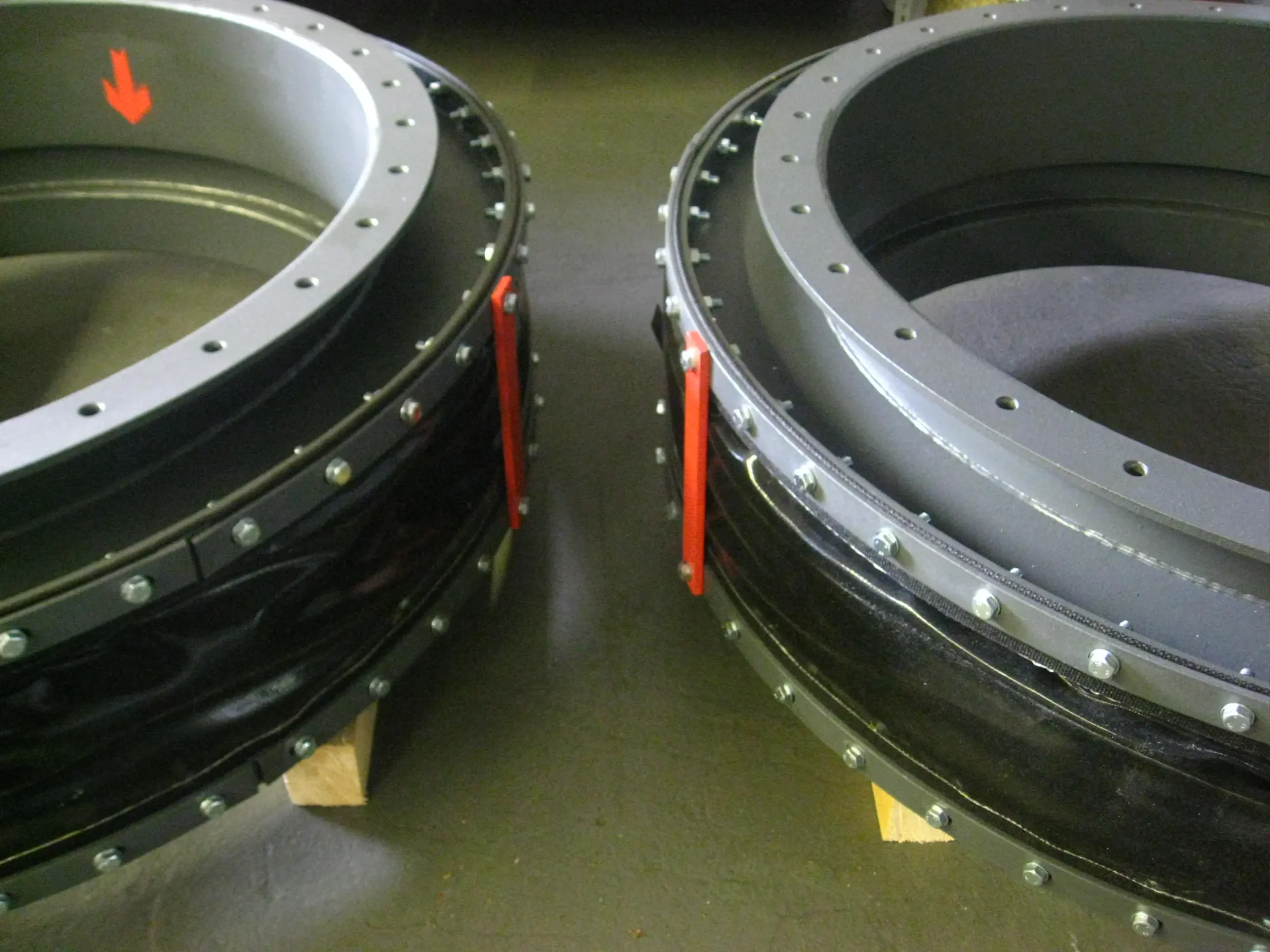
Fabric expansion joints are used within industrial piping systems and duct constructions for absorbing thermal influences, vibrations, pressure differences and displacement within installations.
De compensatoren zijn onder meer geschikt voor rookgas- en heteluchtkanalen binnen industriële procesomgevingen.
High movement absorption with low inherent resistance
Fabric expansion joints can absorb axial, lateral and angular movements within piping systems and duct constructions.
Due to their flexible construction, they offer a high movement absorption capacity with relatively low inherent resistance. In addition, they contribute to the absorption of noise and vibrations within installations.
Constructed from different fabric and foil layers
Fabric expansion joints are constructed from vulcanised sandwich constructions with different fabric and foil layers.
Afhankelijk van de toepassing kunnen compensatoren worden uitgevoerd met isolatiepakketten en specifieke materiaalcombinaties voor uiteenlopende procesomstandigheden en temperatuurbereiken.
In addition, custom versions are available in round, rectangular and oval shapes.
Process conditions and industrial applications
Geschikt voor extreme procesomstandigheden
Fabric expansion joints can be applied within process conditions with temperatures from -100°C to +1200°C.
In addition, solutions are available for applications involving vacuum and overpressure, where chemical and temperature resistance can be tailored to the medium and process conditions.
Applications within heavy industry
Fabric expansion joints are used within a wide range of industrial installations and processes, including:
- Power plants
- Vuilverbrandingsinstallaties
- Cement plants
- Industrial furnaces
- Chemical and petrochemical industry
- Fan connections
In addition, versions are available for applications within the food industry and ATEX environments.
Lightweight solutions for complex installations
Due to the relatively low weight of fabric expansion joints, duct and piping constructions can be designed with lower weight.
This can reduce installation loads and construction costs within complex installations.